
You can get a free South African credit report from each registered bureau once every 12 months under the National Credit Act. Start at the bureau’s consumer portal, confirm your South African ID number, and most profiles verify in minutes. From there, the real work begins: reading what the report says and acting on anything that looks wrong.
TL;DR:
Check TransUnion, Experian, and XDS separately: each offers one free report every 12 months, and lenders may consult different bureaus.
Have your South African ID number, legal name, and birth date ready; outdated contact details can block verification, so contact the bureau if retries fail.
Review balances, payment history, adverse listings, and recent enquiries; unfamiliar details or old judgments can justify a dispute, while clustered applications may hurt approval chances.
Dispute errors directly with the bureau and keep its reference number; listings may be masked within days, then removed if unsupported after about 20 business days.
Seek legal help for court judgments, repeated reinsertions, or negative listings across bureaus; ordinary bureau disputes may not resolve these cases.
Table of Contents
Where to get your free credit report in South Africa
TransUnion and Experian South Africa run the two most widely used consumer portals, and both let you request your free annual report online once you have verified your identity. Experian’s own guidance confirms that creating a profile and verifying your South African ID number is usually enough to pull the report within minutes. XDS, the third major bureau, works the same way and is worth checking separately since lenders do not always pull from the same source.
Beyond the big three, a growing number of banks and financial apps offer score snapshots or lightweight report summaries as part of their digital banking features. These are handy for a quick glance between annual checks, though they rarely show the same depth as a full bureau report.
Third-party dashboards that aggregate bureau data exist too, but they rely on your consent to pull information on your behalf, so read what you are agreeing to before linking your details.
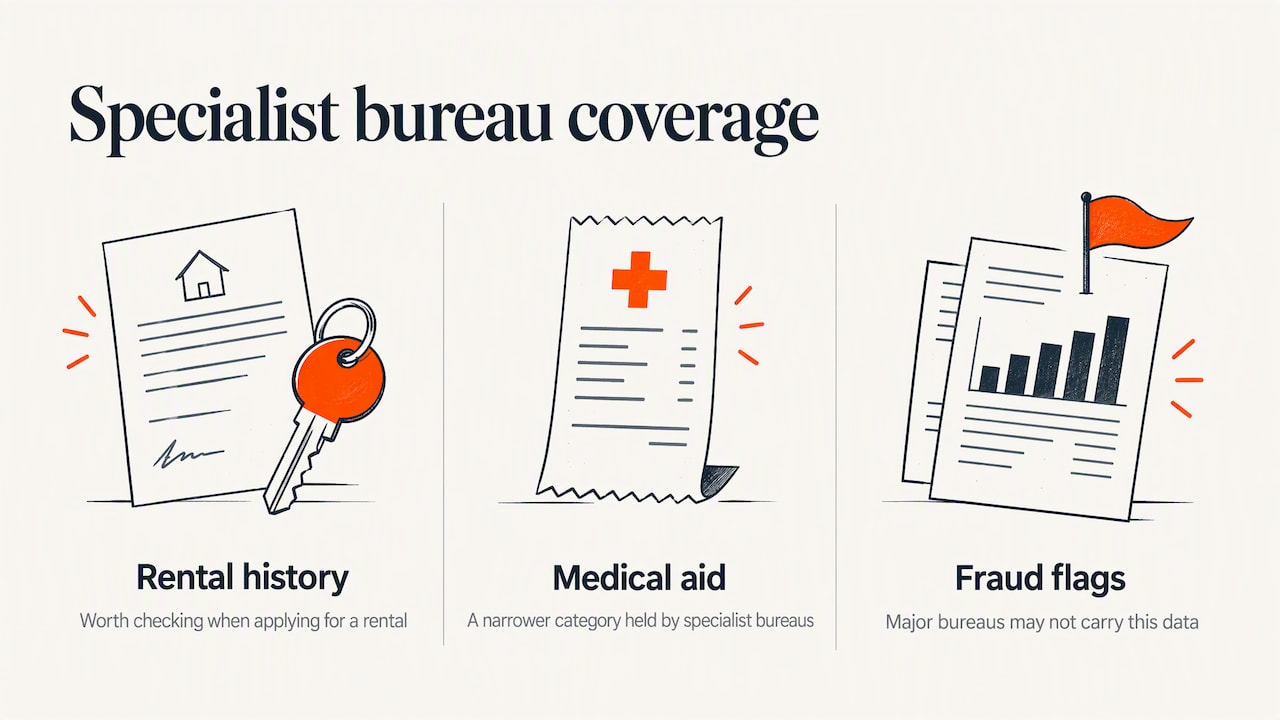
Finally, specialised and secondary bureaus cover narrower categories such as rental history, medical aid payments, or fraud flags. If you are applying for a rental property or have had a dispute with a service provider, these smaller registries are worth a separate look since the major bureaus do not always carry that data.
What you need before you start the verification process
Having the right details on hand before you log in saves a frustrating back-and-forth with support lines later.
-
Have your South African ID number, full legal names, and date of birth ready exactly as they appear on your ID document.
-
Expect the bureau to confirm your identity through one or more checks: security questions about past accounts or addresses, a one-time PIN sent to your registered mobile number, or a selfie-based digital identity check.
-
If verification fails, it is usually because your contact details or address on file are outdated. Experian notes that consumers with inconsistent details across accounts often need to update their information with lenders before the bureau check will pass.
-
When a portal repeatedly rejects your details, contact the bureau’s support line directly rather than retrying the same information, since a manual check can usually resolve a mismatch within a day or two.
How to read your credit report: the checklist of fields that matter
Once the report lands in your inbox, resist the urge to skim past the numbers. A few sections carry most of the weight when a lender or landlord reviews your file.
-
Personal details: your name, ID number, and address history should all match what you expect; mismatches can point to a mixed file with someone else’s data.
-
Account listings: every open and closed account, current balances, and payment history, including any arrears, sit here and form the backbone of your score.
-
Adverse listings: judgments and administration orders appear in this section, and they tend to weigh heavily on loan and rental applications until resolved.
-
Enquiries: a cluster of recent credit applications in a short window can itself lower your appeal to a new lender, even without any missed payments.
Pro Tip: Check the date next to every adverse listing first: a judgment or default that is older than it should be, or one you never recognise, is usually the fastest win in a dispute.
How to dispute errors in your credit report
Finding an error is common enough that the process for fixing one is well defined. Walking through it in order gives you the best chance of a clean resolution.
-
Log the dispute directly with the bureau that is showing the incorrect listing, and keep the reference number it issues, since you will need it for every follow-up.
-
Once your complaint is complete, the bureau or the data supplier that reported the information must look for credible evidence to support it. NCR guidance is specific here: a bare confirmation from the supplier does not count as credible evidence, independent documentary proof is required.
-
Gather your own supporting documents while you wait: proof of payment, settlement letters, or correspondence that contradicts the listing strengthens your case considerably.
-
If the supplier cannot produce credible evidence within the resolution window, which NCR guidelines set at roughly 20 business days from a complete notification, the bureau must remove the disputed information.
-
In the meantime, routine disputes typically see the listing masked within a few business days so it stops affecting new applications while the investigation runs, as described in NCR’s complaint-handling guidelines.
-
If the bureau upholds the listing and you still disagree, you can escalate by submitting Form 29 and lodging a formal complaint with the National Credit Regulator.
More disputes succeed than you might expect. In the second quarter of 2024, more disputes were resolved in favour of consumers than left unchanged, indicating a strong chance of success for well documented challenges, which suggests that a well documented challenge has a genuinely good chance of succeeding.
When professional help makes sense after a bureau check
Some findings are simple enough to resolve directly with the bureau. Others, particularly a court judgment, an administration order, or a listing that keeps reappearing after you thought it was cleared, call for a steadier hand.
-
A judgment or default that has already gone to court, since removing it often involves a formal legal process rather than a bureau dispute form.
-
A listing that reinserts itself after a successful dispute, which usually points to a deeper data-sharing issue between a creditor and the bureau.
-
Multiple negative listings across different bureaus that need to be tackled as one coordinated case rather than separate complaints.
We have experience working on credit record and judgment issues, and our approach combines legal casework with financial advisory rather than administrative dispute filing alone. Before a first consultation, bring your ID, your latest reports from each bureau, and any dispute reference numbers you already have on file.
Why regular credit checks matter in South Africa
A credit report is not a once-off document to glance at before a big application. We think of it as a standing habit, something you check the way you would check a bank statement, because fraud and small errors are easiest to fix early. The dispute numbers from the NCR back up persistence: documented challenges succeed more often than they fail.
— Maria
How MaxLaw can help once you’ve checked your report
If your report shows a judgment, a reinserted default, or arrears that a simple dispute will not fix, that is where our work begins. We handle credit repair, judgment removal, and bureau record clearance as legal casework, not just paperwork.
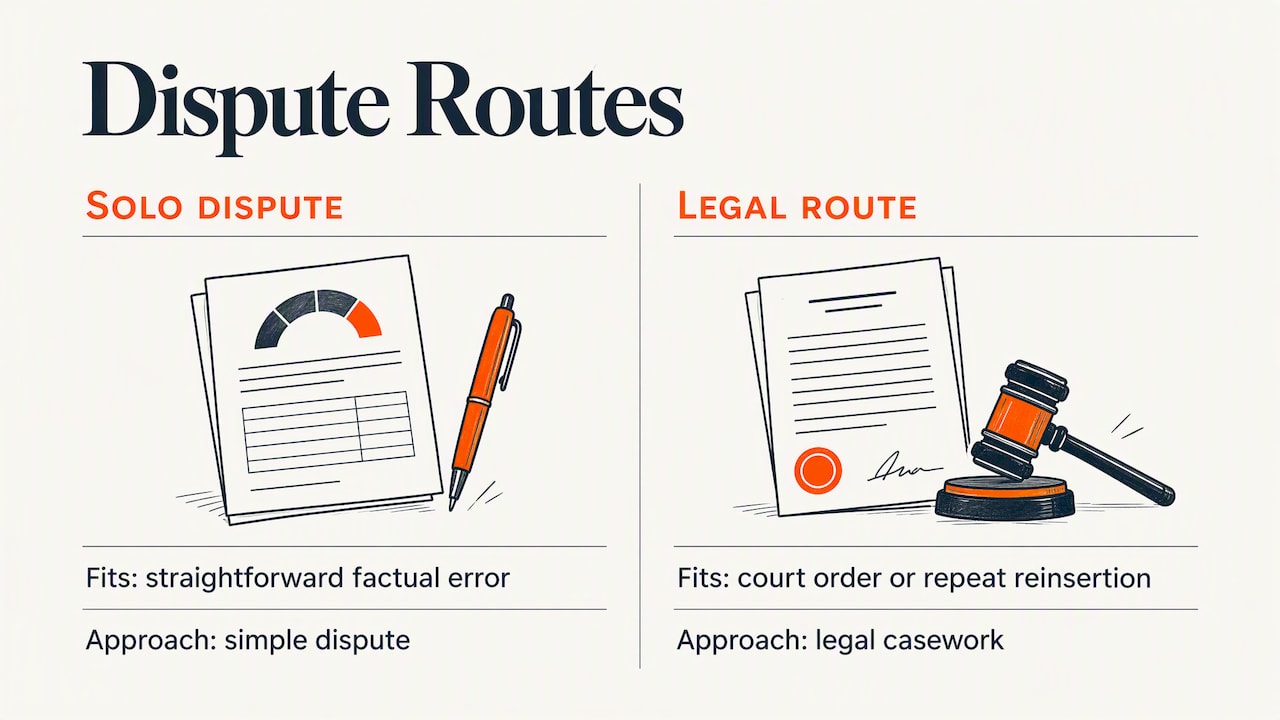
A solo dispute suits a straightforward factual error; a paid legal route makes sense once a court order or repeated reinsertion is involved. Start with our credit repair page to see how we approach it.
This article is general information, not a substitute for advice from a qualified financial advisor. Consult a qualified financial professional about your own circumstances before acting on anything here.
FAQ
How do I get a South African credit report?
Visit a registered bureau’s consumer portal, such as TransUnion, Experian, or XDS, create a profile, and verify your identity with your South African ID number. Experian confirms that most reports are ready within minutes of successful verification, and you are entitled to one free report per bureau every 12 months.
What factors affect my credit score?
Your score reflects your account payment history, current balances relative to limits, any judgments or defaults, and the number of recent credit applications you have made. Lenders look closely at arrears and adverse listings since these carry the most weight in a decision.
How much does credit repair cost?
Pricing depends on the complexity of the case, such as whether it involves a simple dispute or a formal judgment removal. We quote based on your specific file after a review, so the fairest answer is to check with us directly through our credit repair page.
How quickly can I improve a damaged credit score?
There is no fixed timeline that applies to every file, since it depends on what is listed and how a bureau or supplier responds to a dispute. Routine disputes are often masked within a few business days and resolved within roughly 20 business days, while judgments and reinsertions can take longer and may need legal steps.