
If you have paid up every debt under your re-arrangement, you can ask your debt counsellor for a clearance certificate under section 71 of the National Credit Act, which they must file promptly after confirming you qualify. Where no magistrate’s order exists yet, a Section 87 court application may be the right route, and where a debt counsellor refuses to act, the National Consumer Tribunal can step in. The National Credit Regulator oversees all three routes.
TL;DR:
Section 71 allows an ongoing mortgage if every other listed debt is settled, the mortgage has no arrears, and payments remain current.
Collect paid up letters for each listed creditor, your original rearrangement order, and proof of final payments; account mismatches often trigger CBA rejection.
After verifying eligibility, counsellors must file the certificate within seven days; credit bureaus may need additional time to update records after CBA submission.
Court applications usually fit cases before a final magistrate’s order or genuine procedural challenges; expect three to six months or longer, plus legal costs.
Tribunal reviews may take two to eight months when a counsellor refuses despite proof; submit paid up letters and the original order with your complaint.
Table of Contents
-
Overview: the three lawful exit routes and when each applies
-
Eligibility and legal tests: what section 71 actually requires
-
Step-by-step: applying for a clearance certificate (documents, process, and CBA filing)
-
If you can’t get a clearance certificate: the Section 87 / court application and what it requires
-
Costs, typical professional fees and realistic timelines by route
-
After removal: verify your credit record and next steps to rebuild credit
-
Perspective from MaxLaw: how we help clients exit debt review and clear records
Overview: the three lawful exit routes and when each applies
Think of your debt review flag like a lock on a door. You need the right key, and the key depends on where you stand right now.
If you have settled every account covered by your debt re-arrangement, the clearance certificate under section 71 is your key. Your debt counsellor confirms you have paid up, issues the certificate, and files it so credit bureaus can expunge the flag. This is the most common route because most people exit debt review by finishing what they started: paying off the plan.
A Section 87 court application fits a different situation. This route applies before a magistrate has made a final debt re-arrangement order, or when you want to challenge an over-indebtedness finding itself. It is less about “I am finished paying” and more about “this order should never have been made this way.” It requires a court appearance and carries its own costs and delays, which we cover later.
The National Consumer Tribunal (NCT) and consent-order pathways serve consumers stuck between the other two. If your debt counsellor will not issue a clearance certificate despite you meeting the requirements, or if a procedural dispute needs resolving without a full court case, the Tribunal offers a review mechanism built for exactly that gap.
Here is the short version of which section to read next:
-
If every debt is paid up and your debt counsellor agrees, head to the section on applying for a clearance certificate.
-
If no magistrate’s order exists yet or you want to contest the original finding, read the section on Section 87 court applications.
-
If your debt counsellor is refusing to cooperate despite your paperwork being in order, go straight to the Tribunal section.
Most readers land in the first category. Debt review was always meant to end once the underlying debt was cleared, not to become a permanent fixture on a credit record. Understanding which door you are standing in front of saves weeks of chasing the wrong process.
Eligibility and legal tests: what section 71 actually requires
Section 71 sets out two paths to a clearance certificate, and knowing which one applies to you shapes every document you need to gather.
-
Full settlement path: you have paid every amount owing under all credit agreements that were part of your debt re-arrangement, except agreements secured by a mortgage bond.
-
Demonstrated ability path: for certain long-term agreements, including some mortgage-related obligations, you can show you have the ability to satisfy your remaining obligations as set out under section 71(1)(b) without needing to have fully paid them off yet.
The mortgage exception matters because home loans often run for decades, far longer than a typical debt re-arrangement plan. The Act recognises this by allowing consumers with an otherwise settled debt re-arrangement to exit even while a mortgage continues, provided there is no arrears and the bond is being serviced as agreed.
In practice, your debt counsellor and any reviewing body will want to see:
-
Paid-up letters from every credit provider named in your original re-arrangement order, confirming a zero balance.
-
Proof of no arrears on any mortgage bond you are relying on the exception for, typically a recent statement showing up-to-date instalments.
-
Your original debt re-arrangement order or consent order, so the counsellor can match settled accounts against what was originally listed.
If your debt counsellor refuses to issue the certificate despite this proof, you are not without recourse. The Act allows you to approach the National Consumer Tribunal for a review, and case law gives useful guidance on what tribunals and courts actually look for. In Van Vuuren v Roets, the court made clear that once a magistrate has issued a debt re-arrangement order, section 71 is the governing exit route, and that courts are reluctant to rescind an order simply because a consumer’s financial position has improved. The lesson is practical: the paperwork trail matters more than your current bank balance. A consumer who has not formally settled every listed account, even if they could comfortably afford to, still needs to complete the section 71 process rather than ask a court to simply release them early.
Pro Tip: Request paid-up letters the moment you make your final payment, not months later. Credit providers sometimes take weeks to issue them, and a stale or missing letter is the single most common reason clearance applications stall.
Step-by-step: applying for a clearance certificate (documents, process, and CBA filing)
Getting from “I’ve paid everything” to “my flag is gone” follows a reasonably predictable sequence, though each step has its own friction points worth knowing about in advance.
-
Gather your documents. You will need your ID, copies of your original Form 16 or Form 19 debt review documents, paid-up letters from every listed credit provider, and recent bank statements showing the final payments clearing.
-
Submit to your debt counsellor for verification. Your debt counsellor checks your paperwork against the original re-arrangement order and confirms every account is genuinely settled.
-
Debt counsellor issues and files the clearance certificate. Once satisfied, the National Credit Act requires your debt counsellor to issue and file the certificate within seven days.
-
Filing happens through the CBA platform. Debt counsellors upload certified clearance certificates and supporting paid-up letters through the Credit Bureau Association’s debt counselling platform, which verifies the submission and returns an acceptance or rejection code.
-
Track the outcome. A rejection code usually points to a missing paid-up letter or a mismatched account number rather than a fundamental problem with your eligibility, and your debt counsellor must correct and resubmit.
-
Escalate if filing stalls. If your debt counsellor is slow or unresponsive, you can submit a copy of your clearance certificate directly to the NCR and lodge a formal complaint.
Rejections on the CBA platform typically trace back to administrative mismatches rather than genuine ineligibility. The National Credit Regulator’s guideline on the CBA filing process notes that the platform returns verification codes immediately, and that most issues are resolved by confirming paid-up letters and correcting account identifiers before resubmitting. Knowing this in advance means a rejection should not feel like a dead end, it is usually a prompt to fix one document.
The seven-day filing requirement is one of the few hard deadlines in this entire process, and it exists precisely because delays used to be common before the fully digital process and same-day funding from online car title loans standardised submissions. If your debt counsellor is dragging their feet well past that window without a documented reason, that itself is grounds for an NCR complaint.
If you can’t get a clearance certificate: the Section 87 / court application and what it requires
A court application under Section 87 is not the default route for most people exiting debt review, and understanding why helps set realistic expectations before you consider it.
This route generally applies in two situations: before a magistrate has made a final debt re-arrangement order, where the court application is part of the original process rather than an exit from it, or where you want to challenge the original over-indebtedness finding itself, perhaps because of a procedural irregularity in how the order was granted.
What courts typically expect to see includes:
-
A detailed affidavit setting out the facts of your original debt review application and what has changed or what was procedurally wrong.
-
Supporting financial records showing your income, expenses, and the status of each listed debt.
-
Proof of service on all affected credit providers and your debt counsellor, since they are entitled to respond.
The precedent in Van Vuuren v Roets is instructive here too. The court was clear that once a magistrate’s order exists, the statutory path out is section 71, not a fresh court application asking for early release simply because your finances have improved. Courts will consider rescission where there was a genuine procedural problem with how the original order was made, but they are unlikely to grant relief purely on the basis that you now earn more or have fewer expenses than before.
That makes the court route realistically limited for most people who are already under a magistrate’s order. It tends to suit consumers earlier in the process, before an order is finalised, or those with a genuine procedural complaint, more than people simply looking for a shortcut past section 71’s paperwork requirements. Expect several months between filing and a hearing date, and factor in legal representation costs on top of standard court fees.
National Consumer Tribunal (NCT) and consent-order pathways
The Tribunal exists for a specific gap: you meet the requirements, but something in the process has broken down.
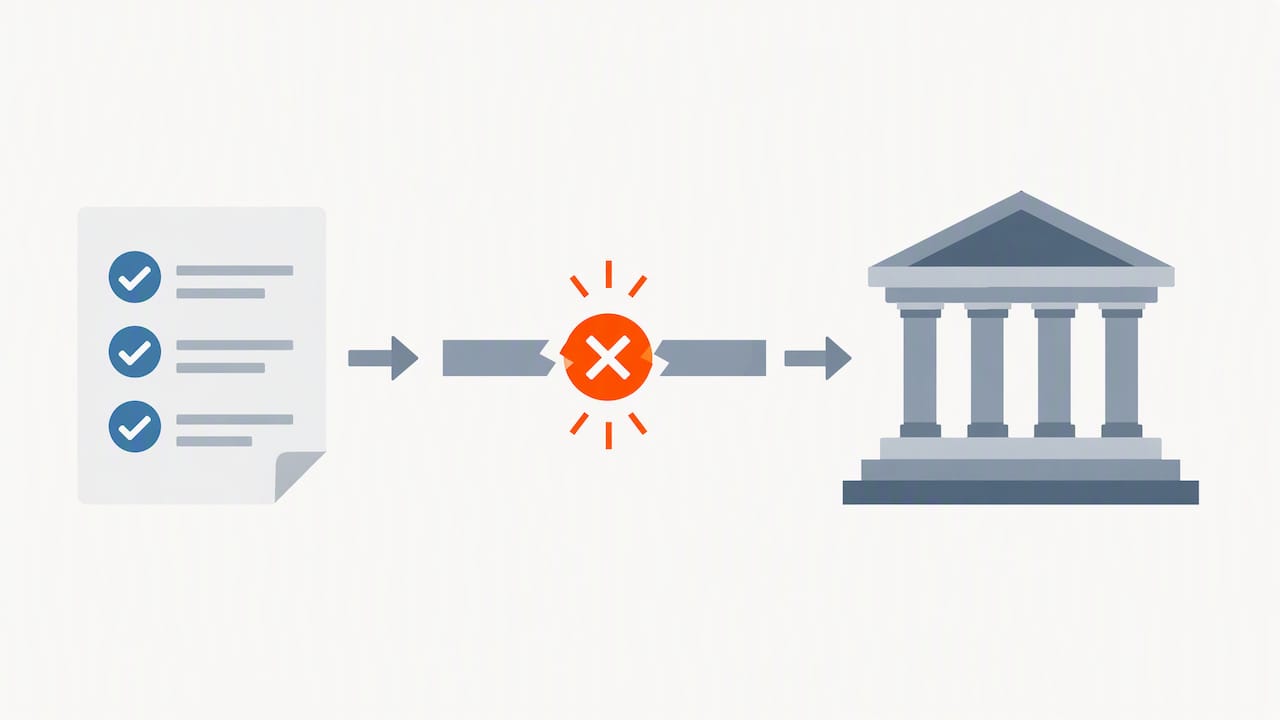
Tribunal review is the appropriate step when your debt counsellor refuses to issue a clearance certificate despite your paperwork satisfying section 71, or when there is a procedural dispute about how your re-arrangement was administered that does not require a full court hearing. A court application, by contrast, suits challenges to the underlying over-indebtedness finding or situations before a magistrate’s order has been made at all.
To lodge a Tribunal review, you generally need to:
-
Submit your complaint to the NCT with supporting documentation, including your paid-up letters, the debt counsellor’s refusal (in writing where possible), and your original re-arrangement order.
-
Allow the Tribunal to consider submissions from both sides, which may include a response from your debt counsellor explaining the refusal.
-
Await a ruling, which can direct the debt counsellor to issue the certificate if the Tribunal finds you meet the section 71 requirements.
A consent-order case works a little differently. Where a debt re-arrangement proposal was confirmed as a consent order rather than contested in court, resolving a dispute about that order often moves through the same Tribunal or magistrate’s court process that confirmed it in the first place. The evidence that helps most is the same evidence that helps everywhere in this process: clean paid-up letters, a complete paper trail of every payment, and a clear written record of any refusal or delay you have experienced from your debt counsellor.
Costs, typical professional fees and realistic timelines by route
Budgeting properly for flag removal means separating the cheap, fast route from the slower, costlier ones.
-
Clearance certificate route: administrative fees are typically modest, often in the low hundreds of rand range for certification and courier costs, since the core process is handled by your existing debt counsellor.
-
Court application route: legal and court fees run considerably higher, with market guidance suggesting application costs can reach several thousand rand before VAT and counsel fees, depending on complexity.
-
Tribunal review: costs sit between the two, since there is no full trial, but you may still want legal assistance preparing submissions.
Ancillary costs apply across all three routes: document certification at a police station or commissioner of oaths, courier or registered post fees for sending certificates to credit providers, and time spent following up with credit providers who are slow to issue paid-up letters.
A clearance certificate must be filed by your debt counsellor within seven days once you satisfy section 71, making it the fastest statutory deadline in the entire framework. Beyond that filing window, actual bureau updates can take additional time as credit providers submit updated payment profiles.
Realistic timeline windows look like this:
-
Clearance certificate: days to a few weeks once your paperwork is complete and verified.
-
Court application: three to six months or longer, depending on court availability and whether the matter is contested.
-
Tribunal review: roughly two to eight months, depending on complexity and how quickly both sides respond to submissions.
What speeds things up: complete paid-up letters on the first submission, prompt responses to any CBA rejection codes, and a debt counsellor who files on time. What slows things down: missing documentation, credit providers who are slow to confirm settlement, and disputes that require written submissions from multiple parties.
After removal: verify your credit record and next steps to rebuild credit
Getting the certificate filed is not the finish line. Confirming it actually reflects on your credit record is the step too many people skip.
-
Request your credit reports from the major bureaus and check specifically for the debt review flag status and your payment profile, not just your credit score.
-
Allow for a reasonable processing window after CBA filing, since credit providers must separately submit updated payment information, and gaps here can leave you with what the NCR’s guideline on sections 69, 70 and 71 describes as a “thin file”, meaning the flag is gone but your payment history looks sparse.
-
Raise discrepancies promptly. If the flag persists past a reasonable window, lodge a complaint with the NCR, ask your debt counsellor to resubmit through the CBA platform, or escalate to the Tribunal if the delay continues without explanation.
-
Start rebuilding deliberately. Keep every settlement letter and clearance certificate copy indefinitely, maintain any ongoing payments without missing a date, and consider whether credit repair support makes sense if disputes persist longer than they should.
A thin file is a common and frustrating outcome of an otherwise successful removal. The flag disappears, but because some credit providers were slow to update payment profiles, your file looks emptier than it should. That is a correctable administrative gap, not a sign that something went wrong with your application, and it is worth knowing the difference before you panic over a lower than expected score. For readers specifically rebuilding toward a car finance or home loan application, it is worth understanding how lenders read a freshly cleared file before applying.
Pro Tip: Check your credit report with more than one bureau. Reporting timing can differ slightly between them, and a flag might clear on one before another catches up.
Common misconceptions and mistakes to avoid
A surprising number of people run into trouble here not because the law is unclear, but because the shortcuts sound more appealing than the actual process.
-
You cannot unilaterally cancel a magistrate’s debt review order just by resuming normal payments. The order stays in force until a clearance certificate is properly issued and filed, regardless of how current your accounts look.
-
Be wary of any service promising instant or guaranteed removal without reviewing your actual paid-up status first. Section 71 has real conditions attached, and no provider can bypass them.
-
Weak or incomplete paid-up evidence is the single biggest cause of delay. A letter missing an account number, a settlement that excludes a small outstanding fee, or a mortgage statement that is not recent enough will all trigger rejections.
-
Improved finances alone are not grounds for a court to rescind an existing order, as the Van Vuuren precedent makes clear. The paperwork trail, not your current affordability, is what the law looks at.
Patience with the paperwork pays off. Every documented step you take now is the evidence that gets a stalled application unstuck later.
Perspective from MaxLaw: how we help clients exit debt review and clear records
We work with many South African clients navigating credit issues, and debt review exits are among the common reasons people seek assistance. We combine legal expertise with financial advisory, which matters here because section 71 is as much about correctly assembled paperwork as it is about legal interpretation.
Typical interventions we offer include:
-
Checking your eligibility against section 71 before you submit anything, so you know which path actually applies to you.
-
Preparing and lodging Tribunal submissions when a debt counsellor is unresponsive or refuses to issue a certificate.
-
Liaising directly with credit providers and debt counsellors to chase paid-up letters and resolve CBA filing rejections.
When you come to a consultation, bring your original debt re-arrangement order, any paid-up letters you already have, and recent bank statements. From there, we can tell you realistically which route fits your situation and what outcome you can expect, whether that is a straightforward clearance certificate filing or a longer Tribunal process.
What the data actually tells us about exiting debt review
The research here points to a conclusion that is less dramatic than most online advice suggests: the system works reasonably well for people who follow it properly, and most of the frustration people feel comes from skipped steps, not a broken process.
Conventional advice online tends to overstate how often court action is needed, when in reality most consumers never need to see a courtroom. The real bottleneck is almost always administrative: a missing paid-up letter, a debt counsellor who is slow to file, or a credit provider who never updates a payment profile. Van Vuuren v Roets reinforces this by closing off the idea that improved finances alone justify a court shortcut.
If there is one thing worth prioritising above all else, it is building your paper trail the moment you make your last payment, not weeks later when memories and documents both fade. That single habit prevents more delays than any legal argument ever will.
— Maria. Senior Advisor. Maxlaw
How we can help you clear a debt review flag
We know the frustration of doing everything right and still watching a flag sit on your record longer than it should. That is exactly where our combined legal and financial advisory approach earns its place: we check your eligibility properly before anything is filed, and we chase the paperwork so you are not stuck waiting on a credit provider’s email.

Our relevant services include Debt Help in South Africa for consumers working through the debt review exit process, Credit Repair for rebuilding your record once the flag clears, and dedicated support if you are specifically trying to clear your credit for a home loan application or car finance.
-
At first contact, we review your original re-arrangement order and any paid-up letters you already hold.
-
We identify whether a clearance certificate, Tribunal review, or court application fits your situation.
-
We handle the back-and-forth with debt counsellors and credit providers on your behalf.
We work with clients through a panel of attorneys, so wherever you are based, reach out through our debt help page to get a clear read on where your application actually stands.
This article is general information, not a substitute for advice from a qualified lawyer. Consult a qualified legal professional about your own circumstances before acting on anything here.
FAQ
How can I get my debt review flag removed?
You get your debt review flag removed by obtaining a clearance certificate under section 71 of the National Credit Act once you have paid up all accounts in your re-arrangement, or by using a Tribunal review if your debt counsellor refuses to issue it. The certificate must be filed within seven days of your debt counsellor confirming you qualify.
How do you remove a red flag from your name?
The lawful way to remove a debt review listing is through your debt counsellor, who verifies your paid-up status and files a clearance certificate via the Credit Bureau Association’s platform so bureaus can expunge the flag. There is no way to remove it yourself directly with a credit bureau without that certificate.
What is the red flag on debt review?
The “red flag” is the debt review status that credit bureaus display once a consumer enters debt counselling, signalling to lenders that the person is under a formal debt re-arrangement. It stays visible until a clearance certificate is issued and properly filed, as confirmed in judgments such as Van Vuuren v Roets.
How much does debt review removal cost?
A clearance certificate typically carries modest administrative fees for certification and courier costs, since your existing debt counsellor handles the filing. A Section 87 court application costs considerably more due to legal and court fees, so most eligible consumers find the clearance certificate route far more affordable.
Sources
Where to find the official rules, guidelines and judgments
Use the National Credit Act, NCR clearance guidelines, and Saflii judgments when lodging NCR complaints or Tribunal applications.