
A freely and voluntarily signed mutual separation agreement usually ends your employment by agreement rather than dismissal, under recent Labour Appeal Court guidance. Before you sign anything, request the UI-19 termination reason in writing, ask for a full payment breakdown with tax-directive confirmation, and have the document reviewed. These three checks protect your UIF claim, your tax position, and your right to challenge the agreement later if something was not quite right.
TL;DR:
Courts may look past the agreement’s title when evidence shows pressure, misrepresentation, or retrenchment without required consultation; preserve emails, meeting notes, and signing timelines.
For UIF, confirm whether the employer records Voluntary Severance Package or Retrenchment or Staff Reduction, and obtain the supporting claim documents before submission.
Preferential treatment applies only when a payment is classified as a severance benefit and covered by a SARS tax directive; otherwise, withholding may be wrong.
Read the release clause for claims waived, and check confidentiality or restraint terms, since signing can limit future claims beyond the employment dispute.
Table of Contents
What a mutual separation agreement actually is
A mutual separation agreement, sometimes offered as a voluntary separation package, is a contract in which you and your employer agree to end the employment relationship on agreed terms rather than through dismissal or resignation. It typically bundles several elements into one document, and the wording of each one matters more than people expect.
-
A severance or ex gratia payment, often calculated against years of service.
-
Treatment of notice: whether you work it, get paid in lieu, or leave immediately.
-
A waiver clause releasing both parties from further claims.
-
Confidentiality and sometimes restraint-of-trade terms.
Employers usually present a voluntary separation package as an invitation rather than an instruction: you can apply, and the employer can accept or decline based on operational need, according to practical HR guidance on voluntary retrenchment. That discretion is worth remembering, because it means the label on the offer does not automatically fix its legal character. A document calling itself a “mutual separation” can still function like a retrenchment in substance, and that distinction shapes both your UIF coding and your rights if things go wrong later.
How South African courts treat mutual separation agreements
The clearest recent signal comes from the Labour Appeal Court, which confirmed that where a mutual separation agreement is freely and voluntarily concluded, no dismissal arises at all, and the unfair dismissal protections in the Labour Relations Act simply do not engage. That finding, summarised in the WBHO Construction matter, means an employee who signed without pressure generally cannot later claim unfair dismissal over the same exit, as explained in Cliffe Dekker Hofmeyr’s employment law alert.
Voluntariness is the word that decides everything. Where there is evidence of coercion, misrepresentation, or an agreement that was really a retrenchment dressed up to sidestep section 189 consultation requirements, courts and arbitrators have been willing to look past the title and set the agreement aside. A 2024 arbitration and Labour Court record on SAFLII shows exactly this pattern: an agreement framed as mutual separation was treated as a retrenchment because the employer never followed the required consultation process.
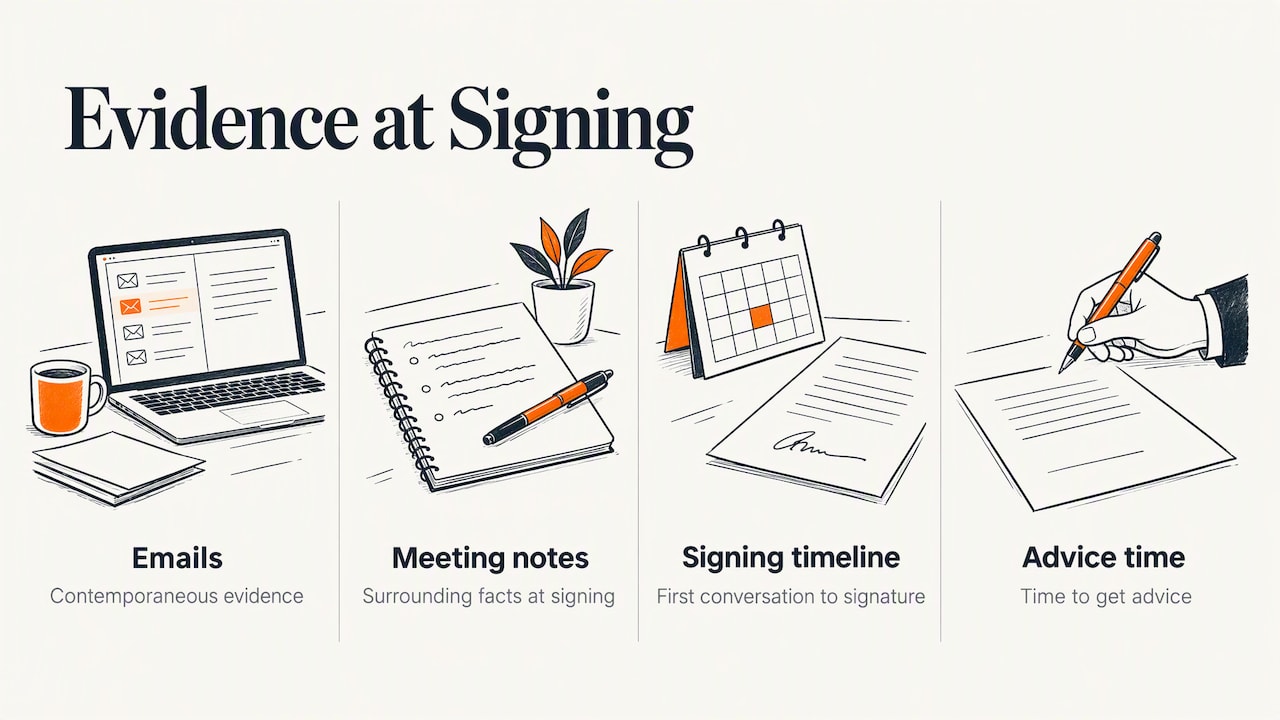
What tends to matter most when an agreement is challenged is not what the document says about itself but what the surrounding facts show. Contemporaneous evidence, emails, meeting notes, the timeline between the first conversation and the signature, and whether you had time to get advice, all speak louder than the heading on the page. If your experience of signing involved pressure, a tight deadline, or no chance to consult anyone, keep a record of that from day one.
UIF and the UI-19 form: get the termination reason right
Your UIF claim depends heavily on how your employer codes the UI-19 form, and this is where many employees lose benefits they were entitled to. The uFiling system used for employer-initiated claims recognises specific termination reasons, including Voluntary Severance Package and Retrenchment or Staff Reduction, each with its own documentary requirements, according to the Department of Employment and Labour’s uFiling EIC guide.
-
Confirm in writing which reason code your employer will use on the UI-19, since “resignation” and “voluntary severance package” are treated very differently for benefit purposes.
-
Ask what supporting documents the employer will upload, such as a VSP letter on company letterhead or a signed retrenchment agreement, since uFiling requires these for the claim to process.
-
Request your own copy of the UI-19 once it is submitted, along with recent payslips, so you have proof if the claim is queried.
-
Ask whether your employer will assist with the UIF submission directly or whether the responsibility falls to you.
Getting this paperwork right before you sign, not after, is the difference between a smooth UIF payout and weeks of back-and-forth with the Department of Employment and Labour.
Tax treatment of your separation payment
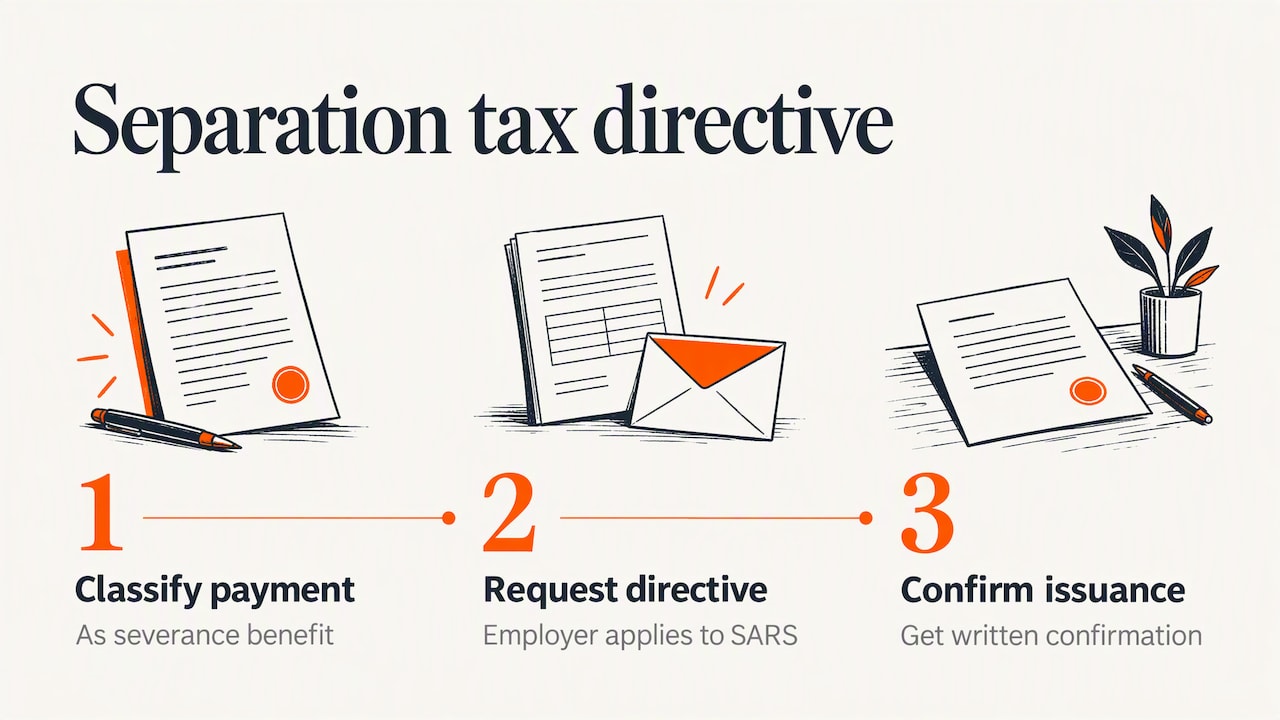
Severance and lump-sum payments made under a mutual separation agreement are not taxed like ordinary salary. They can qualify for preferential treatment under the Income Tax Act’s Second Schedule, but only when correctly classified as a severance benefit. Your employer needs to apply for a SARS tax directive to secure that treatment and ensure the right amount is withheld, as outlined in guidance on drafting voluntary separation agreements and tax directives. Without a directive, your employer may withhold tax incorrectly, leaving you to sort out a refund with SARS later. Ask directly whether a tax directive will be requested and for written confirmation once it is issued.
Your pre-signature checklist
Before you put your name on a mutual separation agreement, work through a short list of confirmations. None of these takes long, and each one closes off a way the agreement could cost you later.
-
Get a full written breakdown of every payment: severance, notice pay, accrued leave, any outstanding bonus, and the exact dates each will be paid.
-
Confirm whether notice will be worked or paid out, since this affects your last official day of employment and your UIF start date.
-
Get the UI-19 reason code in writing, along with confirmation of which documents your employer will upload for your claim.
-
Read the waiver clause carefully: “full and final settlement” wording can be broader than you expect, and restraint or confidentiality terms deserve a proper legal read before you agree.
-
Ask directly whether a SARS tax directive will be sought and whether your employer will help with the UIF submission.
Pro Tip: If you feel rushed or pressured at any point, stop, write down what was said and when, and get advice before you sign anything.
When to bring in a lawyer before you sign
Once you have the draft agreement, a copy of the proposed UI-19 reason, and clarity on the tax directive, the next sensible step is a proper legal read before signature, not after. A lawyer reviewing your mutual separation agreement checks for overbroad waivers, tests whether the payment structure matches what you were promised, and liaises on the UIF and SARS documentation your file will need. Where the circumstances around the offer suggest pressure or incomplete disclosure, that review is also where a potential coercion claim gets properly assessed. Our team at MaxLaw works on matters alongside credit and debt casework, giving us a practical view of how a separation payout affects both your immediate rights and your longer-term financial position.
When a mutual separation can genuinely work in your favour
A mutual separation agreement can be a dignified, fair way to leave a role, particularly when the financial terms are clear and the exit suits your own plans rather than only the employer’s. The agreement itself is rarely the problem. What causes regret later is signing before the UIF coding, the tax directive, and the waiver language have all been checked properly. Treat the paperwork with the same care as the decision to leave, and get a second pair of eyes on it before you commit.
Get your separation agreement reviewed before you sign
Once you have an offer on the table, a document review gives you clarity rather than guesswork about what you are agreeing to. Our team handles labour matters alongside our core credit and debt casework, which means we look at how your separation payout, UIF coding, and tax directive fit together, not just the contract wording in isolation.
If your exit also affects credit applications or existing debt, our Debt Help service and broader legal services cover the related ground. Reach out through MaxLaw to have your mutual separation agreement reviewed before you sign.
This article is general information, not a substitute for advice from a qualified lawyer. Consult a qualified legal professional about your own circumstances before acting on anything here.
FAQ
What is a mutual separation agreement?
A mutual separation agreement is a contract where you and your employer agree to end employment on negotiated terms, rather than through dismissal or resignation. When it is signed freely and voluntarily, Labour Appeal Court guidance confirms it does not amount to a dismissal.
What is a separation agreement?
A separation agreement is the general term for any document that formally records how and when an employment relationship ends, including the payment terms, notice arrangements, and any waivers. A mutual separation agreement is one specific type, distinguished by the fact that both parties agree to the exit rather than one side imposing it.
What are the grounds for separation?
Employment can end through resignation, dismissal, retrenchment, or mutual agreement, and each route carries different legal consequences for UIF and unfair dismissal protection. A mutual separation is grounded in voluntary consent from both sides, which is why courts look closely at whether that consent was genuinely free of pressure or misrepresentation, as seen in a 2024 Labour Court record.
Who qualifies for severance pay in SA?
Severance pay is a standard entitlement in a genuine retrenchment, while a mutual separation agreement can include a comparable payment as a negotiated term rather than a statutory requirement. Whether you qualify, and how it is coded, depends on the reason recorded on your UI-19 and the terms your employer agrees to in writing.
How is a mutual separation different from retrenchment?
Retrenchment follows a formal section 189 consultation process and triggers statutory severance pay, while a mutual separation is a negotiated exit that both sides agree to without that process. The practical risk is a retrenchment dressed up as a mutual separation to avoid consultation, which commentary on the LAC ruling notes courts will still scrutinise on the facts.